
How it All Started: Ade Hofmann's Story
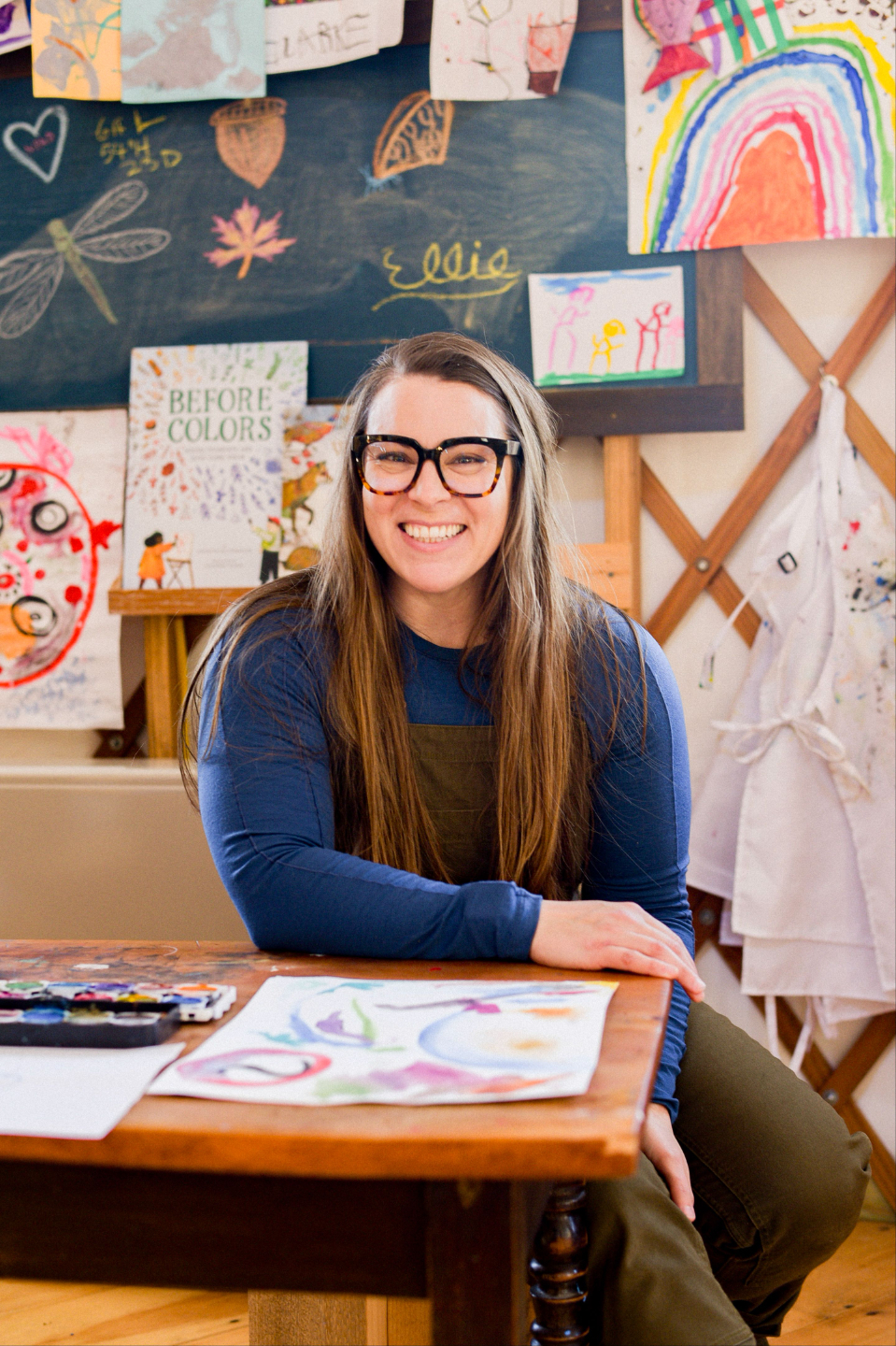
How Children Rewrote the Way I Teach
I’ll never forget the day everything shifted.
After 15+ years of trying to squeeze my deeply held beliefs into a neat, traditional box, I found myself interviewing at a school that felt…different. I walked in dressed to impress, ready to deliver the polished version of what I’d been trained to be: upbeat, talkative, attentive, endlessly “engaging.”
But the moment we entered the outdoor classroom, that old version of me fell apart.
A child was unraveling a clothesline with full intention. Nearby, another child was directing a group effort to move a massive log—tiny foreman hands waving with confidence, voice steady, teammates listening. I approached him with my best teacher-smile and said, “What are you working on today?”
Before he could answer, the Director stepped beside me, calm and matter-of-fact: “We don’t interrupt the children’s work here. Please find a place to hide and observe silently.”
I froze. Surely I’d ruined the interview.
But I stepped back. I hid among the trees. And there, hidden among branches, I watched three-, four-, and five-year-olds collaborate more effectively than many adult teams I’d worked with.
No one needed my prompts, my narration, my constant verbal affirmations. They needed my presence, my warmth, my trust—not my interference.
That moment cracked something open in me.
When the Script Started to Unravel
From that day on, I began noticing everything I had once overlooked:
The child who learned to regulate emotions simply because I sat nearby, quietly stacking sticks with him.
The toddler who put her boots on by herself for the first time—not because I coached her through every step, but because I waited, without rushing.
The preschooler who balanced on a log and let out a quiet, broad-faced smile accompanied by a genuine outburst of “I did it!” — and in that single, smile-filled glance, we shared the silent communication of pride and trust that didn’t need words.
And then there was the day I placed a simple pattern—blueberry, sandwich, blueberry—on a child’s plate to gently support her eating. That tiny invitation opened the door to collaboration and creativity across the entire lunch table.
These moments weren’t “teachable.” They were transformative—mostly for me.
The Shift From Controlling to Trusting
After over a decade in conventional classrooms and learning environments, I traded fluorescent lights for sunshine and, eventually, reimagined my entire relationship with children, teaching, and myself.
I realized:
Children don’t need us to perform.
They don’t need us to direct every next step.
They definitely don’t need us to narrate every move they make.
What they do need is:
Warmth and compassion
Fewer words
Simple gestures of support
Adults who observe before acting
Time and space to build their own understanding
Environments that help them regulate, explore, and take meaningful risks
They need us to show up wholeheartedly, but step back thoughtfully.
That balance—presence without control—is what rewrote everything for me.
A Philosophy Rooted in Nature and Trust
Since 2017, I’ve been rebuilding early childhood education from the ground up for children, educators, caregivers, and families.
My philosophy is simple:
Living is learning.Play is a right.Observation is a superpower.The outdoors is the most authentic learning environment for EVERYONE, no matter their age.
I believe one of my soul purposes, aside from facilitating a space where children are encouraged to learn through exploration and play, is to help educators, caregivers, and families reclaim their energy, rewrite their roles, and return to a child-led approach that honors development instead of rushing it.
This work isn’t just for the children—it’s for us. Because when we learn to trust their process, we begin to trust our own again.
Relearning My Role Changed Everything
Learning to talk less and interrupt less wasn’t just a teaching shift. It was a life shift. It helped me dismantle burnout, reconnect with my values, and finally step into the educator—and human—I always hoped I could be.
And here’s the invitation I extend to you:
When we step back and allow children to lead, an entire world of learning opens up—one you don’t have to manufacture, perform for, or control.
You simply have to be there.
With warmth.
With presence.
With trust.

Comments